When Kilkenny Domestic Abuse Action Network, in partnership with CYPSC Kilkenny, commissioned this project, the goal was clear: bring multiple frontline services together to create a single, accessible roadmap for domestic abuse support. Working directly with stakeholders across the network, the focus was on turning complex, often fragmented pathways into something simple, human, and immediate. A tool that could help people recognise their situation and take the next step, whatever that might be.
-
We led a structured facilitation process with 15 stakeholders across Kilkenny Domestic Abuse Action Network, including Health Service Executive, Garda Síochána, Amber Women's Refuge and CYPSC Kilkenny, to build a shared understanding of how domestic abuse is experienced, identified, and supported across services.
From these workshops, we:
Mapped each organisation’s perspective to uncover gaps, overlaps, and key decision points
Structured the entire system around three core audiences: victims, friends/family, and those who may not yet recognise abuse
Developed a clear hierarchy of messaging to ensure no one was excluded
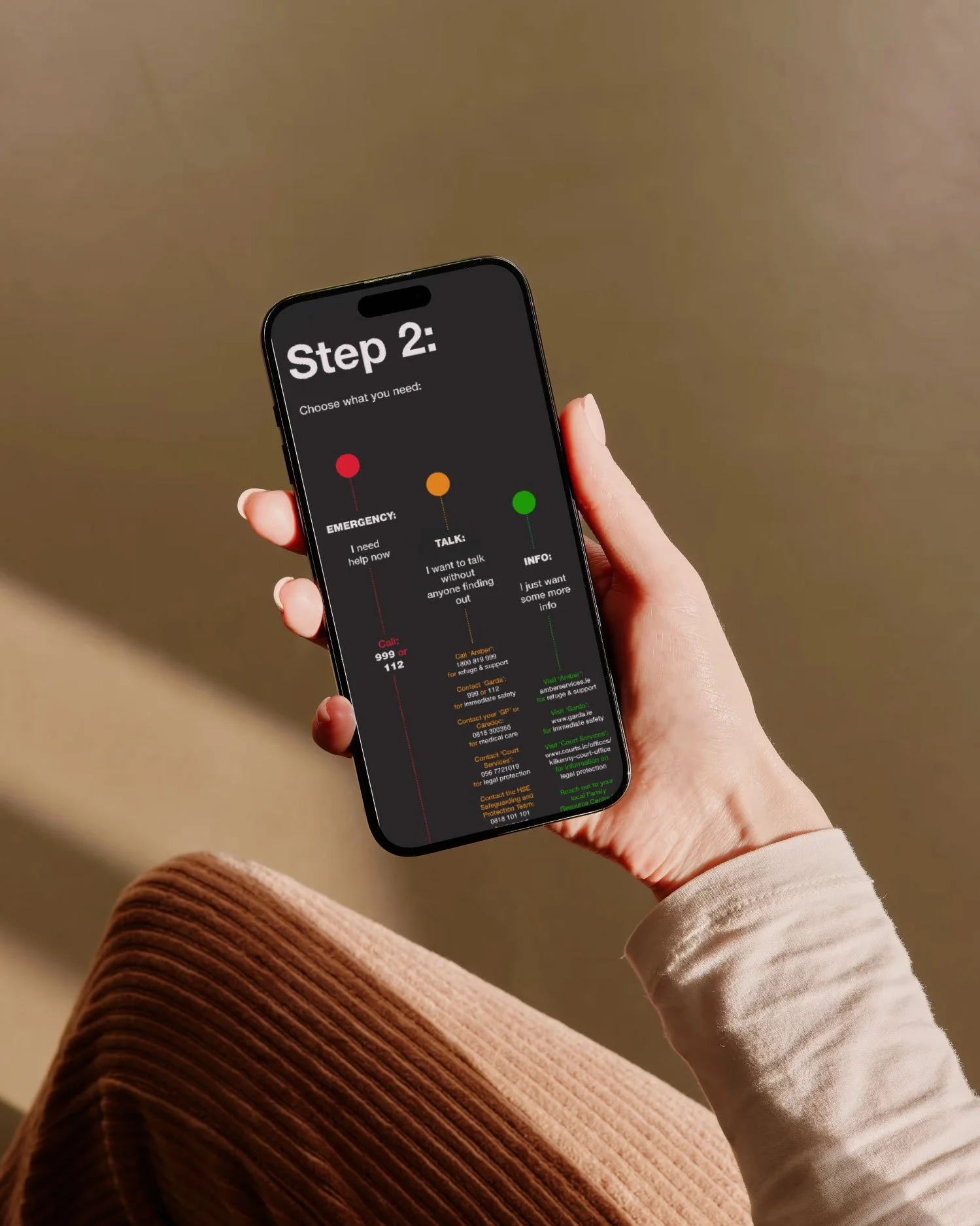
Created a simple, intuitive user journey using a traffic light system to guide people based on their situation
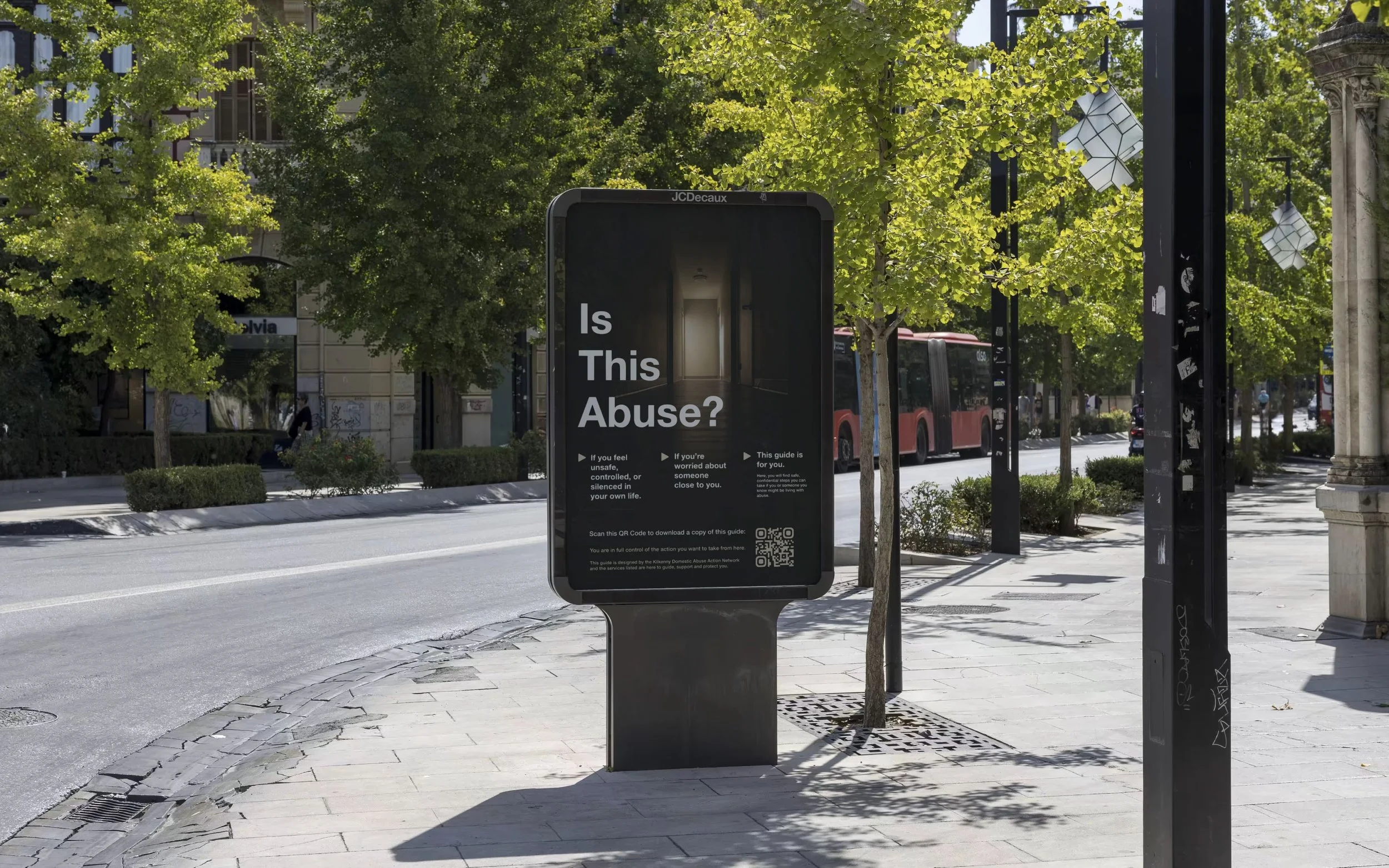
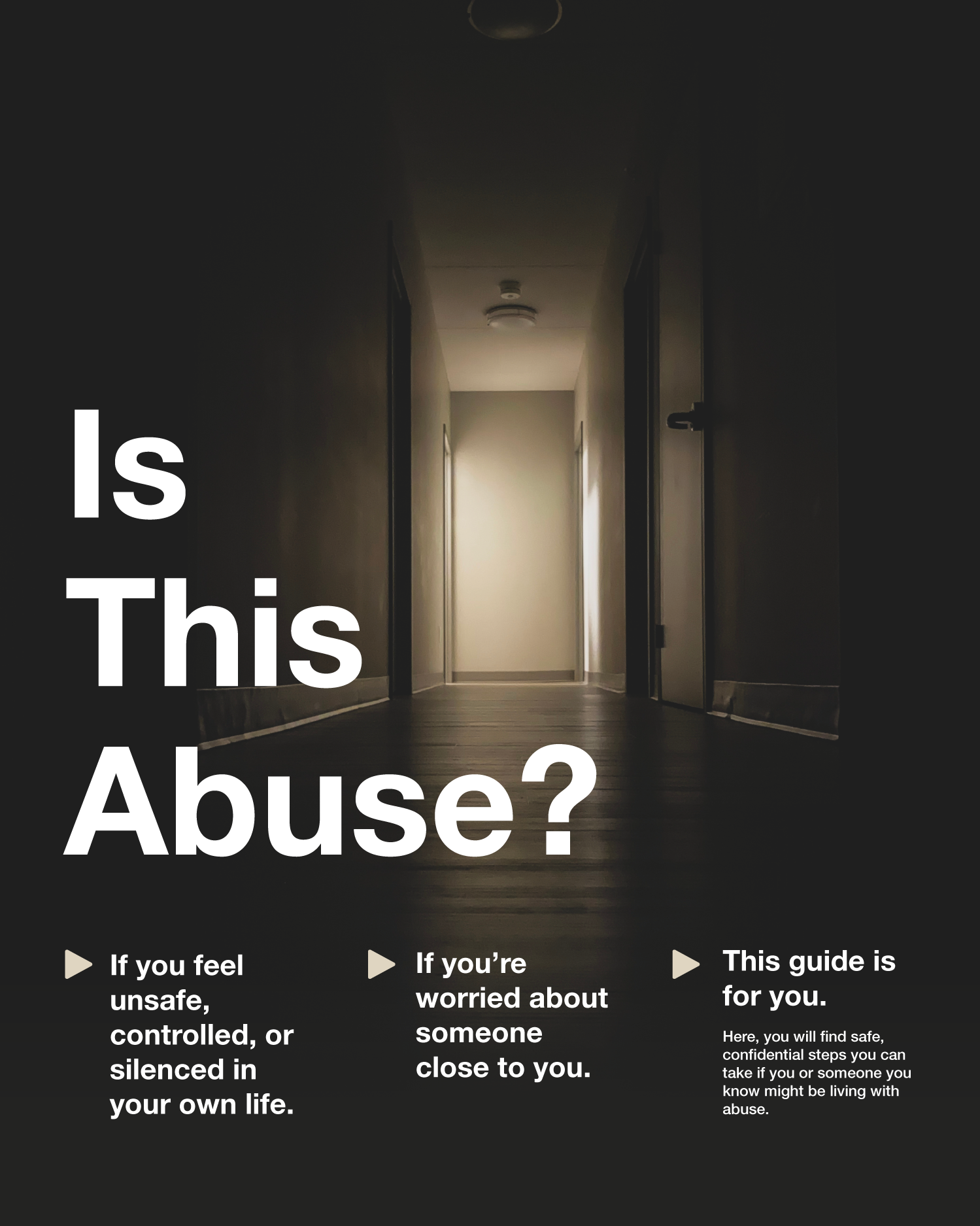
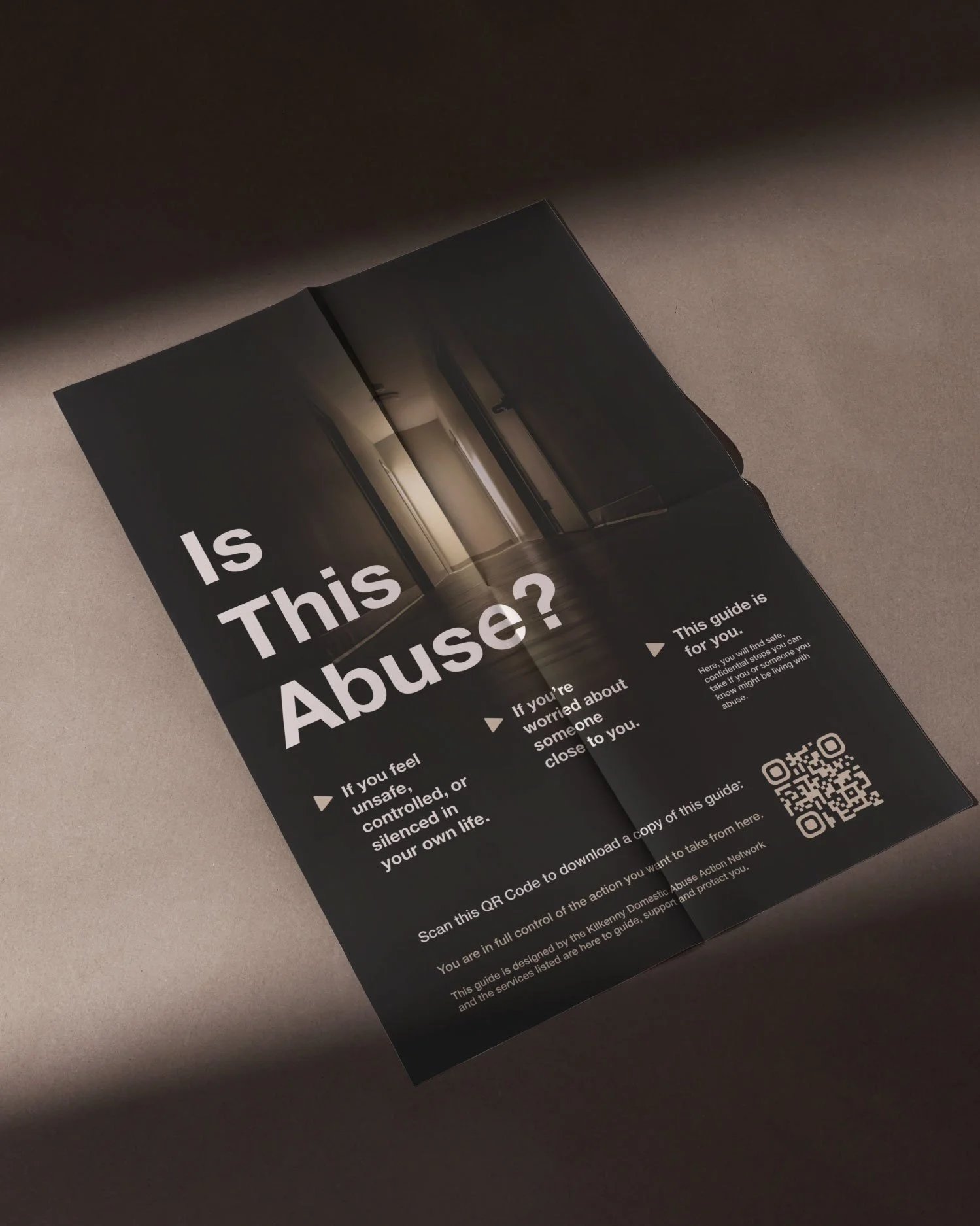
Defined a visual and messaging approach centred around the prompt: “Is This Abuse?”
We then translated this into a cohesive set of outputs:
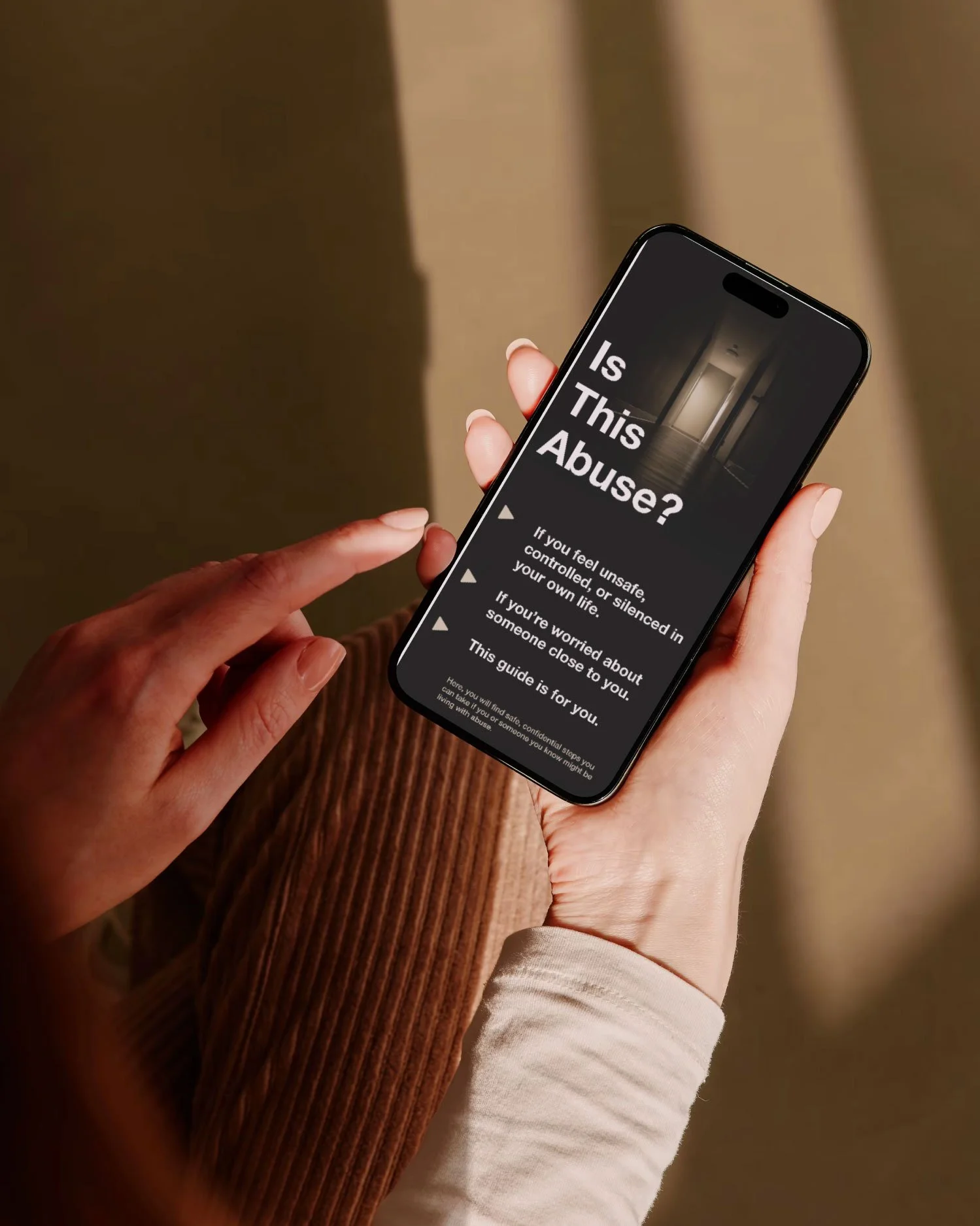
A digital roadmap accessible via QR code
Printed posters for public and clinical spaces
Leaflets for direct distribution
All designed to work together as one clear, consistent support system across the network.
-
KDAAN Roadmap Project
Client: Kilkenny Domestic Abuse Action Network in partnership with CYPSC Kilkenny
Role: Facilitation, Strategy, Messaging, Design DirectionThe Challenge
Domestic abuse services exist across multiple organisations.
But from the outside, it’s not always clear:
Where to go
Who to trust
What even qualifies as abuse
For many people, especially those experiencing it, clarity is everything.
KDAAN needed a single, unified roadmap that could:
Bring multiple service providers together
Speak clearly to different audiences
Guide people toward the right support, quickly and safely
The Approach
This wasn’t a design-first project.
It started with listening.I facilitated a series of workshops with 15 stakeholders across KDAAN, including representatives from:
Health Service Executive
Garda Síochána
Amber Women's Refuge
CYPSC and other frontline services
Each brought a different perspective on domestic abuse.
The goal was to:
Understand how each service defines and responds to abuse
Identify gaps, overlaps, and friction points
Build a shared understanding across the network
Structuring the Message
Once everything was on the table, the real work began.
We organised the entire system around three key audiences:
Victims
Friends & family of victims
People who don’t yet realise they are victims
This last group was critical.
Because often, the first step isn’t seeking help.
It’s recognising the situation.From there, we created a clear hierarchy of messaging to ensure:
No one was excluded
Language stayed simple and accessible
Every pathway felt safe and relevant
The Creative Direction
The visual approach needed to be immediate and real.
The central image:
A darkened hallway in a home.Because statistically, this is where much abuse takes place.
The message:
“Is This Abuse?”No assumptions.
No overwhelm.
Just a question.From there, we introduced a traffic light system:
Red → Immediate danger / urgent support
Amber → Concern / uncertainty
Green → Information / understanding
This allowed users to self-identify their situation
and move at their own pace.The Outcome
The final solution was designed to meet people where they are.
It included:
A digital roadmap, accessible via QR code
Printed posters for public spaces and clinics
Leaflets for direct distribution
A clear, unified structure used across all stakeholder organisations
Launched across Kilkenny through the KDAAN network,
the project created a shared language and pathway for support.The Impact
Multiple agencies aligned under one clear system
Improved accessibility for vulnerable audiences
A framework that supports early recognition, not just crisis response
A practical tool for both the public and frontline staff
Key Insight
When dealing with something as complex as domestic abuse,
clarity isn’t just helpful.It’s critical.
This project shows the role design and facilitation can play
in turning fragmented services into a cohesive, human-centred system.
Contact PB Studio to talk through your project.
Fill in this form and book a consultation with one of our team. We are always happy to help.
Similar Projects